Saturday, November 7, 2009

Trader Joe's Moved Into The Neighborhood


Is this scenario I am about to describe looking familiar in your neighborhood? Many strip malls sit two thirds, or half empty. Small businesses, one by one have closed over the past year. Your favorite restaurant is locked when you pull the handle, but you are pretty sure they were open last week.

I witnessed the economy slowly sinking years ago in Texas, but when I moved to New Jersey I thought the worst of times were behind me. Lots of small businesses closed before the big companies began to move out of the area, or shut down period. Many of my friends were out of work, and have had to move out of state to find jobs. Even hubby had to seek employment in the mid-west before he found solid income base in New Jersey four years ago. Is his job secure we ask ourselves today. People keep telling me that it will turn around. Tale-spin is what I say. Yet, chains like Trader Joe's seem to find a way to open in New Jersey. Have you wondered what the secret is?

When you work in the food industry over the years you learn that starting small, peaking the consumers interest, and keep the prices reasonable is a smart start. I have always loved giant gourmet and organic markets such as Central Market (Texas), Wegman's and Whole Foods, but face it the prices can be astronomical on the food budget. Curbing budgets with the economy changes is a challenge. Friends, clients, and many of you want good prices, but we all still want to satisfy taste buds with hard to find treats and ingredients...I discovered Trader Joe's.

They opened years ago back home in Texas, but it was exciting to learn we had one opening just south of my house. Sure, people like Donna-FFW who live in Jersey are saying "Well E, there is one up north in Westfield"! Hey, Donna I am turning into a true New Jersian...I do not want to drive out of my neighborhood unless we are having lunch some day! *hint hint*


Trader Joe's is not your normal grocery market experience. The company actually began as a convenience store in the LA area; until someone realized they were up against a chain (I was employed with the Southland Corporation during my early college years), 7-11. Changing the company's strategy has kept them thriving. Turning the business into something more than what is the 'norm' was brilliant. A book has even been written explaining their strategy, 'Turning a Unique Approach to Business into a Retail and Cultural Phenomenon', The Trader Joe's Adventure, written by author Len Lewis.

I made a phone call asking my friend Gen if she had been to the new store, and what did she think. She got so excited telling me she had been there three times just since its opening at the end of September (I wrote this piece at the beginning of October). Gen went on to explain that you will find Trader Joe’s own manufactured products in most of their isles, and with decent prices. Finally I explained that I already was aware of TJ's concept via living in Dallas.

Hubby made a stop into Trader Joe's while I was traveling. He bought a few things for me to try when I returned- Wild Garlic bulbs, hummus, bread, and a few jars of sauces bearing the Traders Joe name. I am all for good narcissistic marketing particularly when it offers me a better price. He complained that the fresh produce section is small for our dark green vegetable eating habits. An upside is that they sell local organic produce at low prices, along with other sections that would not disappoint consumers.

The downside to Trader Joe's (most markets have one) is many of their products are not organic, local, and many packaged goods contain sugar, excess salt, cornstarch and other refined ingredients. Even with the convenience of ready made products, we have to keep our health in mind. So, as with any store, I recommend reading the labels before making your final selections.


Pork Medallions with Garlic Rice & Black Beans

1 Pork Tenderloin, sliced into 1/2 inch pieces-

Place pork in between plastic wrap and use mallet to flatten to 1/4 thick; drizzle with olive oil, salt/pepper to taste.

4-7 Cloves of garlic; slice thinly, and set aside
1/2 Red Onion; half, and then thin slices
2-3 tablespoons olive oil

In medium hot pan place oil, and just before smoking point add garlic and onion; remove just as it begins to brown, or will turn bitter; remove to plate.

Cook pork in seasoned oil, and remove as each medallion brown.

Add rice into same pan, and brown with another table spoon oil; add stock, and cook per instructions.

Trader Joe's
US Highway 1
Princeton, NJ
(609) 897-0581

Tuesday, November 3, 2009

I Am Trout!


Food can be poetry, so I have decided to share one of my latest poems as part of my post...

New Jersey keeps their lakes and rivers stocked with trout in the spring, summer, and fall, and is some of the best trout fishing in the north east. Hubby and I like searching out good spots to fish, catch, and most of all eat trout. The Pequest Hatchery, and river up north is surrounded with beautiful river spots, so on our way home from Salmon fishing we decided to cast another hook. Well hubby caught one, as I patiently waited by the bank with my pen and paper.


Once home, I cleaned and prepared the trout for our dinner. Using a recipe I developed years ago- Apple Cider Poached Fish: apples, garlic, red onions, Jamaican Allspice, salt/pepper to taste, and local made Apple Cider. To me this is the perfect fall fish recipe.

In the past poaching using this recipe was done in a medium sauce pan to cover more of the fish with liquid. Playing with my original recipe the fish started out in the oven, but worked better with the stove top method. The infused flavors give the fish a wonderful fall flavor.


I perfected this recipe in my cafe; it is very flavorful with most types of white fish such as talapia and Basa. Salmon poached in packets with the same ingredients has been just as delicious. Just add some Asparagus tips for an additional and healthy touch.

The great side dish came about by combining olive oil, red onion, chopped bacon, small red bliss, and chiffonade savoy cabbage (amounts up to you); then saute ingredients in medium hot skillet; then covered with lid to steam cook the potatoes a bit more. Spread mixture on a plate and top off with fish; spoon on thickened juices from pan.

Pan Sauce: Reduce the apple cider mixture; thicken with a tablespoon of flour; drizzle over the fish and slaw mixture. Hubby opened up a Chardonnay we picked up in the Finger Lakes Region of Lake Seneca on our anniversary.


I Am Trout


Sitting, relaxed
Waiting, in
Rose’s chair
Autumns early
Cold afternoon
By the river...
I see two
Trout, playing
Chasing
Each other
Tails swift
Movement
Sending waves
Sounds up
To my ears...
My lips part
With a smile
Warming up
The moment
As geese fly
Their laughter
Wa Wa
Wandering...
For food
A cold pan
Waits, as I
Wonder
If I’ll eat soon...
My cold hands
Would love
To wrap
Themselves
Around a rod
Spinning...
A wise word
A baited line
Towards
Two fish
Two trout
Today…

Smarter, than this cold human being…

© E Stelling, 2009

Friday, October 30, 2009

Chow & Chatter Is Goan Away


Rebecca @ Chow & Chatter has asked me to guest host, since she has left on a trip. Rebecca is a wife, mother of a beautiful girl, and a working Dietitian. You will always find such great dishes and healthy eating pieces on her site, and she is a sweety.

Go over and see what she and I have been up to, and what 'Goan' has to do with it all!

Monday, October 26, 2009

Caldo Verde- Portuguese Kale Soup


Hubby and I traveled up north to Hoboken, NJ for a family gathering. We ate a modest lunch, and at best had a few vegetables with spinach dip at his sisters apartment; which gave us an appetite for some adventurous and filling food. Hoboken is quite a unique little city, and is often referred to as Little NYC. Almost as if it broke off from Manhattan and floated over to Jersey.


There are many great restaurants to try in Hoboken, and we do not go as often as we would like. One place caught my eye as we drove down Washington, Piri Piri- Portuguese Cuisine. Food offerings you do not see in the Princeton area, but I am sure you see in places like the real NYC.
Their front windows slide open to the street for an urban city feel, and includes some outside table seating. I call it great 'people watching' decor, one of the lures of any urban area. This particular day was chilly, so we sat inside. Piri Piri's interior had a European feel that consisted of burnt orange and brick walls with a splash of deft blue table tiles.


Their moderate sized and priced menu offered food for many taste buds. Just across from our table we noticed a small menu board that was black in the dimly lit space, but with florescent wording.

We made our choices. I would have a cup of the Caldo Verde- Kale Soup (they were calling their version collard green soup) and Grandma's Rice and Shrimp. Hubby ordered the BBQ pork ribs that came with rice and Piri Piri potatoes (their version of homemade American chips). The recommended that the special I ordered was hug, and we should share a sample of the soup (no small portions sold).


Waiters bring out a curious little condiment holders filled with Carocos (black olives) and Azeitonas (spicy pickled banana peppers, carrots, and cauliflower pieces). Hubby dislikes olives, so I enjoyed them all by myself.
We were pleased when the food arrived- Grandmas rice and shrimp (a huge portion) was served in a traditional Spanish paella platter, and the flavor was vaguely familiar, but great. In the mood for some spicy flavor after eating the condiments, I asked the waiter if the had a hot sauce. The staff was very friendly in spite of the crowd, but gave great service, answered questions about the food, opened our wine, and even brought me a bottle of Portuguese hot sauce. The bottle sported the same name of the restaurant!

Hubby was not so pleased with his ribs, but was hungry all the same. I found that squeezing the lemon juice on the crispy pork ribs gave it a nice touch. BBQ was the highlight of the menu, and I found the crispy, almost pork skin crisp appealing. The rice however was rather bland, and I never understood rice and chips served together as a side. Realizing they are both traditionally served in Spain and Portugal, but I feel more vegetarian sides should be offered.

Both of us were quite surprised when the soup came to our table. I asked if it was a traditional recipe, and why was there so little collard greens present, as the name mis-represented itself. He explained that traditionally it was a potato and roasted garlic soup. The presentation was however appealing with the garnish of greens and thinly sliced chorizo. No more qualms, I took the first bite...it was delicious!


Even to this day,  I cannot get that restaurant out of my head. Every dish was great, and that soup...what a wonderful way to take the chill off of our evening. I could not wait to talk to my friend Rico @ Rico's Cafe to hear his take on this experience (he is Portuguese) and ask him for more Portuguese recipes like these.

Our day in Hoboken was very eventful. Who does not like walking in that city environment and coming away with a good restaurant experience? The soup kept lingering in the back of my mind, so I did the research and made a pot. I could eat soup anytime of the year...

Portuguese Kale Soup- Caldo Verde

1 large head garlic
4 tablespoons olive oil, plus more for roasting the garlic- save garlic oil
1 large russet potato
3 large stalks celery
1 teaspoon chopped fresh thyme or 1/2 teaspoon dried thyme
1 bay leaf
1 teaspoon sea salt, plus more to taste
Freshly ground black pepper (I substituted white pepper)
2 cups whole milk (I used goat cheese when I pureed soup)
2 to 3 cups vegetable broth
6 to 7 ounces Russian kale, or other kale

Preheat the oven to 375°F (190°C).

Prepare the garlic heads by removing the loose outer husk off of garlic; slice off a tiny bit of the top, place the garlic on a square of aluminum foil; drizzle a little olive oil over it. Fold the foil up; crimp to seal it. Roast the garlic for about 40 minutes, or until it gives when pressed. Allow it to cool. (I made this the night before)

Meanwhile, peel and dice the potatoes, cut the celery into small dice, and combine the vegetables in a soup pot along with 3 cups cold water. Add the thyme, bay leaf, 1 teaspoon salt, some black pepper, and a large pinch of red pepper flakes. Bring the water to a boil, lower the heat, and simmer, covered, for 15 minutes or until the vegetables are completely soft.

Squeeze the soft roasted cloves out of their skins and add them to the soup. Stir in the milk and puree the soup in a blender, in batches, or with an immersion blender, but be careful not to over process. Stop the moment the vegetables are smooth, or the potatoes could turn too starchy.

Return the soup to the pot, and stir in enough vegetable broth to give the soup the consistency you like. Taste, and add salt and pepper if needed. I stirred in the goat cheese at this point until it blended well.

Clean, dry, trim the kale, slicing away the tough stems, and cut it into 1-inch squares. Heat 1 tablespoon olive oil in a nonstick pan and stir the chopped garlic in it for a minute or two, just until it begins to color. Add the kale and saute it, stirring constantly at first, then frequently, until it thoroughly wilts. Add a splash of soup broth (a few tablespoons); then cover the pan and let the kale steam until the water is gone and the kale is tender, 5 to 6 minutes. Stir the kale into the soup.

Drizzle about a teaspoon of the remaining roasted garlic olive oil over each serving of soup, and like the Portuguese restaurant I dined at, Piri Piri, I added some slivers of chorizo I crisped in the pan before cooking my kale. Also throw a splash of hot sauce on top before eating; it will heat up the upcoming cold nights! I scored some of this hot sauce to take home. Thanks guys for letting me have this great taste of Portugal!


I am looking forward to visiting Piri Piri again and having another helping of 'Grandmas Rice'...


Piri Piri Barbeque- Portuguese Cuisine
515 Washington Street
Hoboken, NJ 07030
(201) 710-5333
Closed Mondays

Piri piri is the name used in the ex-Portuguese colony of Mozambique to describe the African bird's-eye chili. There are several variations in spelling derived from various pronunciations of the word throughout Africa, but "Piri piri" is the correct spelling in Portuguese.

Piri piri is widely used in Portuguese cuisine. (from Piri Piri website)

In Japanese, in some cases, the term piri piri is used to describe something stinging on the tongue.

Monday, October 19, 2009

Salmon- King For A Week


The king in my house is hubby, so I decided after talking to Gordon in Florida, about how hubby and I like fishing, to take him salmon fishing for our anniversary. Explaining to him that we have not caught any fish over two pounds since a trip down to his part of the country years ago, and hubby was frustrated. He asked if we had ever been to Alaska fishing for salmon. Saying no, Gordon suggested we meet up in Pulaski, NY October 10th. The Salmon River; where many pull in the big catch. He promised that we would never forget the feel of yelling 'Fish On' when we felt a thirty pound salmon on the other end of our line. The biggest fish I had ever pulled in the boat was twenty two pounds.

October 11th is our wedding anniversary. The day we knew we were in love, and shared a passion for food, wine, travel, and fishing. As my plans began to fall in place, I learned that this trek meant booking your rooms months in advance, and I got lucky. Did it, all done, and packed. We were ready to hit the road!

First we headed up to the Finger Lakes, and spent our actual anniversary night at a bed and breakfast. A little exploration, good wine tasting, and a fabulous breakfast was waiting that blissful morning!


The Anna Rose Wine Country Bed & Breakfast comes highly recommended in the Seneca Lake region. Inn keepers Sharon and Ken Miller run a beautiful place that is located in the heart of the Seneca Wine Trail. They are very knowledgeable about the area wineries, and go out of their way to make you feel at home. If you want the utmost in hospitality with their beautiful accommodations, I have listed the information on the photo below.

Add Image


They offer six rooms that appeal to all sorts of taste. We stayed in the 'Anna Rose' room. If you have a group, or just want to have a weekend get away, I recommend you try this spot for your retreat. We are hosting an even with our American Wine Society group here in the spring.


Check out what is in their backyard!


I love this time of the year with fall colors, and the cooler weather. So many breathtaking pictures can be pursued. Inspiration for my poetry, and short story writing.


We left The Finger Lakes area on Sunday, and headed over to Pulaski, NY where the King 'Chinook' Salmon a week before had begun to head upstream to spawn. The second or third week of October female salmon head to the shallow gravel beds of the river to lay their eggs. The males follow, and then cover the eggs with milt. Eventually they finish their life cycle and die; then the Steelhead Trout head into the area to eat the eggs. This is one of the reasons many feel its a challenge to snag one of these big fish. (this shot was taken near Orwell Brook, a place known for spawning beds)


I was bothered about the fact that fishermen were trekking all about the eggs that lay under their feet, but felt re-leaved to find out there was a hatchery nearby. They raise Co Ho, Chinook, and Steel-head Trout to replenish the rivers and lakes supplies. I spared you the many pictures taken of the hatchery workers removing eggs and milt; fertilizing the eggs, and placing them in holding buckets. The holding room were they go after they are hatched was huge. They explain how the fish are released into the wild at an early age, so that they can swim to area waters such as Lake Ontario.

I believe they told us that only one in five hundred fish return to the place of their birth. They are either eaten by other fish, are fished out, or simply die.


Gordon giving us advise- Types of rods, reels, bait to use, tips on casting, and pulling these big fish in.


Another section of Orwell Brook- a location where we heard they had been pulling in salmon by the dozens. Gordon and Hubby finally land one.


Gordon and I showing off one of our day's catch at sunset for our Friday Shoot Out- 'Sunrise/Sunset' post last week.


Our Drift Boat guide, Don Kingsley. We started at 5:15 AM; making stops during the day along the river to cast some spinning and fly rods.


Cleaning stations are positioned in and around Pulaski, and are required by law; unless you live in the area, you cannot clean and fillet your own fish. Many years before the state created these rules, fishermen and hunters would come in by the droves leaving animal, fish carcasses along with trash on the river banks.They will fillet, smoke, and store your catch; until you are ready to leave.


On our last night in Pulaski I asked our hosts if I could cook for the whole house, and would have to borrow their kitchen. The agreed, so I made Baked Salmon with Penne Amore (below). The house was full of wonderful and friendly people who go each year return to experience the fishing. The three other gentlemen fish in the No Fly Zone. They believe in a catch and release philosophy, but they were kind enough to accept my offer to eat the salmon I caught.

Joanna and Steve Young run this beautiful house, Woodlawn Bed & Breakfast. They treat you like family. I will be posting the photos of the whole house in a few weeks. They have it up for sale, and are looking for someone who would keep the bed and breakfast business going. So much work went into their 1800's farmhouse (with original barn). This wonderful couple have turned it into a place were most feel like family! I will be posting pictures of the rooms soon...


I was a bit apprehensive about cooking and eating the salmon we caught. I heard so many different stories about how the salmon's meat deteriorates as it begins its adult spawning cycle. Many locals who fish in Pulaski (our guide Don) said they bake, or smoke it. A few locals I spoke to in town said they would not touch it. Gordon on the other hand said he bakes and smokes all of the fish he brings back home. Internet information reads that only the males are worth eating if they have not spawned, and it all depended on what part of the river you catch them. The older they are, the tougher the meat. This holds true in most of the foods we consume.

Now that I have gone through the experience- two of the males we caught down stream still had their nice silver coloring, so I made the decision to have one smoked, and would cook one half fillet for dinner and freeze the rest. Thanks Buffalodick, he was kind enough to collaborate on these findings by stating "The older and larger the salmon, the worse it gets eating fresh... brine and smoke them, and use in dips and spreads..."

I looked up recipes for salmon roe we took from the females. Wanting to see if it was worth the process, and it was. We learned that many Russians from the NYC love to fish for the salmon, and collecting the roe; even selling their catch when they return to the city.

Hubby enjoyed his anniversary trip; along with the meals I made- Salmon Roe, Smoked Salmon, and more baked fillet dishes. I need a bigger freezer!


Baked King Salmon Fillets with Penne A'more

Preheat oven to 375 degrees;

7- 4 oz salmon fillets
1 lemon, juiced
3 tablespoons chopped basil
2 tablespoons chopped parsley
1/4 red onion, diced
4 tablespoons EVO
salt/pepper to taste

Cut, clean, and separate fillets in baking dish; pour above mixture over salmon; let sit for 20 minutes in refrigerator; prepare 1 package Penne pasta al dente; bake salmon for 20 - 27 minutes.

In separate pan prepare Penne ingredients on medium-high heat;

3-4 tablespoons olive oil
4-7 garlic cloves, diced
1/3 red onion, medium pieces
3 tablespoons pine nuts

begin to saute for about 7 minutes, and then add:

1 bunch asparagus, cleaned, drained, cut into 1 1/2 inch pieces

1 jar roasted red peppers in oil, 1/3 oil drained out
1 jar artichokes in water, drained completely

Turn off heat; toss with Penne, and cover with lid until ready to eat; toss once again before serving with salmon.


If anyone is interested in the fishing tour guide of their lives- Contact: Tightlines Guide Service, Captain Don Kingsley-Owner, (315) 298-3833, 1(800)452-1176, or email: alaska.don@gmail.com

Anna Rose Wine Country Bed & Breakfast, 524 Rock Stream Road, Rock Stream, NY 14878 Innkeepers- Sharon & Ken Miller

Woodlawn Bed & Breakfast, 4677 Salina Street, Pulaski, NY 13142, Steve & Joanna Young

Summer Still Lingers


I can't help thinking about how summer just flew by this year. Going through some of the recipes and pics I have left over from my trips to Texas just makes me want to beam back and enjoy it all again. This dish I have posted works as a good crossover 'summer/cold weather' comfort food.

While I was with my friends in Dallas I made (upon request) brunch food. Cheryl wanted me to make spinach artichoke dip when I was there in June, but I ran out of time. Giving her idea another thought I decided it would make a good topping for English muffins. Spinach is good all year round dark green leafy vegetable, and was great as that days main attraction.

Simple, easy, healthy, filling, and delicious!

Lisa was not so sure about my dish, but decided to try one. Once she took a bite, she asked for another helping!


I reminded her that as kids we witnessed Popeye's incredible strength from eating his spinach, and his came straight from a can. We get the benefits of adding extra flavors to ours.


How about my incredibly blurry photo here of the spinach artichoke spread before it went into the oven. This is what you call 'in a hurry to feed hungry women'...

Spinach Artichoke Spread/Dip on English Muffins

Saute:

2 bags of fresh spinach
head of roasted garlic
1 can artichokes, in water and dice
3 tablespoons of olive oil
2 tablespoons of salted butter
Salt/Pepper to taste

-until spinach wilts; add:

1/4 cup of Parmesan cheese
1/4 cup of heavy cream

-cook until liquid begins to disappear; toast English Muffins, and spread as much of this spread as you desire; sprinkle with cheddar cheese, and serve.

An afterthought: I should have broken an egg on top and made 'Green Eggs Benedict', but it was all gone by the time that thought hit the table!

I guess it will be next years 'Summers End' post...

Thursday, October 8, 2009

'Putting Up' With Me


This month it has been one great year of blogging for me, and I do not plan to stop any time soon. I love everything about food; discovering, cooking, and eating as much as I can, as well as writing on the subjct. There will be many more fun dishes on my site, and I thank all of those who come over and read my blog!

While on my long drive this past September visiting areas of Virginia, Tennessee, Kentucky, and then down to Texas; I had the opportunity to listen to one of my favorite NPR programs, The Splendid Table hosted by Lynne Rossetto Kasper. 'She gives public radio listeners a fresh take on their love of food' the website reads, and I feel this is so true. Many of the programs are great, but one in particular was so relevant to my visit in the Appalachian mountain area.

[The rolling hills of my friends family farm land]


NPR's Splendid Table host, Lynn began interviewing a woman who is part of the 'Canning Across America' group. Go over and check out their website, as well as the September 26th program that discussed the movement they refer to as 'Putting Up'. A term I heard my own grandmother use on many occasion. Many of us grew up eating canned goods; whether in small batch canning from items passed to us from friends and neighbors, or crops our families grew on their own property. Canning was a way of life for many in the south, and has made a come back in the recent years as part of the broader sustainability movement. Also associated with locally grown and organic eating of localvors involved in Slow Food.

In farm communities like the Appalachian mountain area; 'putting up' has never wavered. Canning has long been a way of preserving foods through the winter months. Tiding over families that have little or no money; when waste of crops is not an option. Canning today for the most part has become more of a hobby. A hobby out of necessity for my own family while my children were small, and with little money; it was well worth the labor it took to collect, clean, prepare, cook, and can the piles of home grown, or farmers market goods (I was part of a farmers market co-op for many years, and now a CSA local program).

My friend, Lisa (who grew up, and lives in the Virginia mountains) took me out to visit some friends and relatives. We collected a few canned items, and stories along the way. One item still a favorite of mine today, Apple Butter. Did your mom ever burn toast like mine, but save it with home made jam? I have heard similar stories from people on how their mom's would burn toast, but after spreading this thick sweet concoction, or any homemade jam on a dark slice; that helped salvage breakfast. Boy did it taste great then!

My own grandmother canned many things like tomatoes, concord grapes, peaches, and made apple butter from ingredients they grew on their property. Like many of our own families; they learned from their parents; who learned from theirs, and on down the line. Chronicling my dad's genealogy this past June I found that his side of the family came from this area, and lived here for many years before moving to Texas. I plan on passing down this 'putting up' family tradition to my own grand kids one day. The areas history of 'putting up' Apple Butter (as found on this blog site), and other Appalachian customs make an interesting read.

I headed back home with jars of apple butter, salted pork loin, and shhh! even a jar of Corn Mash aka Moonshine...better known as white lightning in the area. The government now allows a legal version of moonshine to be produced in the area; it is 80 proof, 40 % alc/vol they call Georgia Moon Corn Whiskey (sold in local liquor markets). I have not sampled any of the goods yet, and the decision is also still out on what recipes will be used for each gift I received.


When you go over to the 'Canning Across America' site you will see the tops of light blue mason jars. They were and are still used for canning. and from what I am told moonshine in the mountains. Bootleggers also used recycled jug handle vinegar bottles that appear in the Tennessee area if you search hard enough.

While shopping at local antique stores I found the blue Mason/Ball jars, as well as vinegar bottles for a pretty penny- $45 each or more. Simple unmarked glass jars (pictured above) are sold at a much less price in grocery stores. Traditional new or used Ball and Mason jars are still however the popular choice for 'putting up' in most parts of the country.

[A local coal mine processing station near Nickelsville, Virginia; were I was visiting in September, 2009]


I was telling a story...

I am going away to fish for King Salmon in Pulaski, NY for our anniversary. An anniversary present for hubby, and a chance to catch Steel Head Trout, and maybe a brown, or river trout while we ware at it. I will be back to report on the outcome. This time of year the Kings come to spawn, and we hear they catch them on a daily basis (up to 30 lbs). Debates have sprung up on whether the fish is worth eating due to its deterioration after spawning begins, but we will see. Maybe there is a 'drunken' salmon recipe in the making here...

Appalachian Mountain Cuisine History

Food served in the Appalachian Mountains differs slightly from other southern cuisine, but was molded much of the southern foods that made its way to harsh territories of the old west- The Southeastern region of the mountains was settled mostly by English, Scottish, and German decent. Terrible travel conditions and poor roads limited most settlements to only foods that could be produced locally. Seafood, beyond the occasionally locally caught fish, were unheard of.
Diets were almost meatless, except for wild game, particularly during the winter. Pigs were raised and the meat cured for later consumption, but often the meat was used as a flavoring instead of as the main course. For example, sausage was often cooked in small portions primarily to obtain grease for use in gravy instead of as a main course.

Corn introduced into our culture by native Americans also influenced our diets and cuisine in many parts of our country. Cornbread was eaten regularly since corn grew well locally. As flour became available, biscuits and johnny cakes became more popular. Salt was available, notably from Saltville, Virginia, but until black pepper appeared, few other seasonings were used. Meats were generally smoke cured until then.

Women in this area were often herbalists, and may used local plants in seasoning. Chicory, which could be grown locally, was a well known coffee substitute. Corn whiskey, milk, and water were available from the farm. Coffee, sugar, and tea were all slow to become available. Fruits that tend to be more popular in this area are berries and apples.

Home canning
is a strong tradition

Dried beans are a major staple food during the winter months, and were the cheapest of the foods available. Typically they are served as soup beans with wild onions and salt pork for seasoning. Kieffer pears were available along with apples that are used to make pear honey and apple butter. Canning included green beans (half-runners, snaps) as well as shelled beans (green beans that were more mature, and had ripe beans along with the green husks). Also popular were bread and butter pickles, pickled beets, and chow-chow (something my dad loved to make). Tomatoes were canned in large numbers. Along with sausage gravy, tomato gravy, a roux thinned with tomatoes, was very popular.

Southern Cuisine of the Appalachian Mountains

Mountain dwelling was very common for not only mountain men but it was very common for large families.With the exception of coffee, food supplies many times duplicated the diet of native tribes in various locations. Wild game hunting and trapping was the source of the meat; which gave them fresh red meat, fowl, and fish. Fresh water was always available due to pure mountain steams. Plants such as fruit and berries, were easy to harvest. Until sugar became available, beet sugar was used to sweeten dishes used for dessert and pies. They also had plenty of time for food preparation, such as roots, dried meat, herb gathering and gardening but this was and is no easy chore.

Fire Side Cooking- Grilling/BBQ

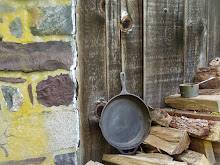
Fire side cooking would be compared to Barbecuing and grilling as we know it today. We all know how delicious food tastes when cooked on the grill. Hillbillies and mountain dwellers ate this way all the time. Black cast iron pots and skillets were perfect for fire side cooking.

Modern Living exists in rural communities, but is not preferred.
Many of the people that lived in the early 1700's did not have the conveniences many of us do today. They lived and some still live that way because they like being away from civilization of big city life. Their use and knowledge of surviving off of the land with many skills we practice today, and how we consider them hobbies as Survivalists- such as foraging wild fruits, berries, roots, hunting and trapping.

Information provided by:
Daryl & Lisa Combs, as well as Combs family members, Nickelsville, VA
A History of Appalachia - by Richard B Drake
Appalachian home cooking: history, culture, and recipes By Mark F. Sohn