Wednesday, December 7, 2011

Sushi Came From Korea, Originally?


With my family touring Korea we often had versions of sushi and local students would say the trend started in their country. I am not totally sure, nor an expert, and what we had was not what you have had in America. It looked like Japanese sushi, but a variation.

Most of it is served with a spicy red past, sometimes wasabi was siting in your side dish waiting for soy sauce, and always with their own fermented sauce (made in jars), which is lighter and not as salty.

My son dragged us down the street from his apartment to have what he kept calling Kimbab. The spelling is different that what we were hearing as he said the name, Gimbab (G is the 'K' sound, and bab or bap is always rice).

Basically it is Bibimbap wrapped up in Gim, or as we know it Nori aka dried sea weed. They brush it with sesame oil after rolling it. The photo above shows Gimbab, often spelled Gimpap, made by the woman here.


Around the coastal towns haedobop is eaten in a bowl like it's cousin dish bibimbop. All the ingredients found in sushi or maki rolls, but on top of the rice. Usually fish or the 'hae' is the last ingredient topped off with minced garlic and a spicy fermented paste called gochujang.

Like bibimbop you stir the ingredients together adding more spicy red paste (looks like ketchup, and sweet). We had this in Jeonju, just outside of Busan near King Moonmo's sea side burial place. They often us tilapia, which is kept in fish tanks, and very fresh. You literally watch each restaurant cut the fish up on the spot..

This was my favorite the whole trip. Why, because of the fresh greens and salad, rice was served on the side. Many times Korean dishes like barbeque were served with lettuces and ggaenip leaves for wrapping, so this was a nice change. Most all dishes are served with banchan or side dishes, most often variances of kimchi and other pickled dishes. Each restaurant uses their own recipe for these sides, and I found some to be very spicy, but good.


Korean rolls (or kimbab) above in photo of woman rolling, are much more robust than Japanese rolls. The ingredients are usually fully cooked, the rice is either unseasoned, or seasoned with sesame oil/seeds. The ingredients will include all sorts of things like pickled daikon, fried or steamed egg, seasoned meat, sauteed julienned vegetables such as carrrots, mushrooms, fish cakes. Very hearty fare. It is tasty, but very different than Japanese maki. They are served with kimchi and soup or 'jjigae' or guk. A spicy red paste broth with seaweed and thinly sliced onion and zucchini, and  most often has soft tofu as an ingredient, lots of it known as Sundubu jjigae. They have many varieties of soup, which I enjoyed.

Below is a version of bibimbop where the egg is cooked on the side of a hot bowl. Next to it is the spicy paste. We had this in Jeonju for dinner- known as a popular bibimbap eating experience.

Traveling to Korea can be a bit of a food shock. Most Korean restaurant menus do not have English translations, so you might want to learn some Hangul, Korean. It helped my son has been there a while and translated as we went. There are western restaurants, but most have their own versions of our food, even chains like On The Border. Which I found the salsa my son brought us did not taste at all like what I know here. I found adjusting to their food a bit harder than other countries we have traveled.

Wednesday, November 30, 2011

Tomatoes On The Vine, or is it Squids?

Velva of Tomatoes On The Vine has honored me by posting one of my photos on her 'Wordless Wednesday' features.

The picture was taken October during my trip to Geongju, Korea.

It's something I have titled 'The Squiggling Fields'.

She has an awesome blog, and if you have not checked it out...what is wrong with you?

Have a blessed week!

Wednesday, November 23, 2011

Happy Thanksgiving Everyone!


Family can be a wonderful reason to be thankful.

I have all the pies baked, cranberry, pumpkin and banana breads baked, and more to load up in the car for our long drive tonight, and I wanted to throw a hello your way.

Hubby's mom had sever back problems now, so all the women in the family get assigned one cooking job to contribute for the large meal. He has seven other siblings that may or may not appear around a rather large table. We also stay over at his step mom's house the following day and I cook. She does not cook, so it is a treat for her when we come.

Hubby and I wish you the best of what you desire for the day!

I love my family- my hubby and son in the photo above. BTW I may not look like it (not a great choice of blouse to wear) but I am in the best shape physically I have been in years. Exercising three or four times a week, eating right, lots of walking in Korea, and I got my test results back from my physical and blood work, the best number I have had in six years. Lower than ever. The weight is slowly coming off, but I did what the doctor asked for my own health.

Another reason to celebrate!

Monday, November 21, 2011

Got Squid? Ojingeochae Bokkeum


While trying Soju Bombs at a local Korean restaurant, we oreded this dish- Stir Fried Squid. I have grown to love squid outside of calamari platters, mostly fried. I even had the honor of cleaning and preparing them for the restaurant I worked here in Princeton. Hubby and my son often have eaten it in sushi restaurants, and on occasion myself. We definitely enjoyed this- Stir Fried Squid Strips or Ojingeochae Bokkeum.

There are great Korean blogs featuring this recipe.

I read how Koreans like chewy seafood dishes, like Abalone and how they even leave the center of fish filets in for a more chewy experience. Live octopus is another menu item you see in Korea, which we try fresh on Jeju Island. Still squirming. I know ewww.

Stir Fried Squid Strips and pasta right out of the skillet is one of my recommendations if you get to travel to Seoul. Seafood taken right out of the outside tanks feet from your table, kind of cool, and you'll know it's fresh.


My Korean Kitchen offers up a recipe for packages of dried squid you can pick up in Asian stores. When we were on the coast of Jeonju, we witness a woman cleaning and drying them for this process. Most markets there sell them in this condition, ready to take home. They will keep for months this way. You simply soak them, clean them, and cut them into pieces, or vise versa. Here is a post showing you how to cut up the squid- Korean Recipes. It is also a great site for recipes with some explanation.


Just outside of Geonju, Korea, off the coast you can see the rows and rows of drying squid. Cool experience firsthand.

Saturday, November 12, 2011

Korean Soju Bombs

No I'm not talking about starting another war with an Asian country. But if you have enough of these you might get into some big trouble. I figure it is the weekend, so why not introduce a Korean drink to celebrate my return home.

What is Soju?


Soju- is a distilled beverage native to Korea. Its taste is comparable to vodka, though often slightly sweeter due to sugars added in the manufacturing process, and more commonly consumed neat. Soju has been mostly made from rice, but much of it is made from starch like potatoes, wheat, barley, sweet potatoes, or even tapioca.

To me it does taste more like vodka, but sweet? I am not sure where that came from.


First you order a bottle of Soju, coke, and a rather large beer...because these guys think they are something they begin showing off...


By the sound of my son and his friend Jeff's enthusiasm in having a drinking night out, I insisted we order food to coat the stomach. What kind of food? Beer food, fried chicken (Koreans love their fried chicken) and shrimp, with a side of french fries- okay, basically you are loading calories on with fried food.

Hubby ordered skillet squid, well that is what I called it...it is really Ojingeochae (Stir Fried Dried Squid Strips with a side of pasta, and another post).


Eating Fried Chicken is another story my son explains; it consist of eating parts you might not want, so I stuck to eating shrimp and fries. Meet Jeff, he just married a Korean girl, a beautiful one at that named Cindy. He kindly demonstrates creating a Soju bomb...


1) first you pour the shots of coke and soju in their own separate glasses...


2) then you layer them on top of each other in beer mug...seems vaguely familiar, like something I had in St. Louis with an old friend, but he used Red Bull.


3) then you slowly pour the beer over the layered shots until it is full...


4) You will need to find a few volunteers to drink them as Jeff pours more...one volunteer leads the group into a night of laughs and more eating experiences...oh, but I have to drink first...


drink...


and drink...


After my rather slow drinking, everyone else had beat me to the finish.

Confession: I did not do it in one shot like they were attempting. I never was much of a party'rowser, or did I even begin drinking until I was almost 34. I also would have preferred the coke to be a Pepsi. I just don't like the taste of coke, I'm a proud Pepsi rebel.


What now?

How many Soju Bombs does it take to screw in a light bulb?

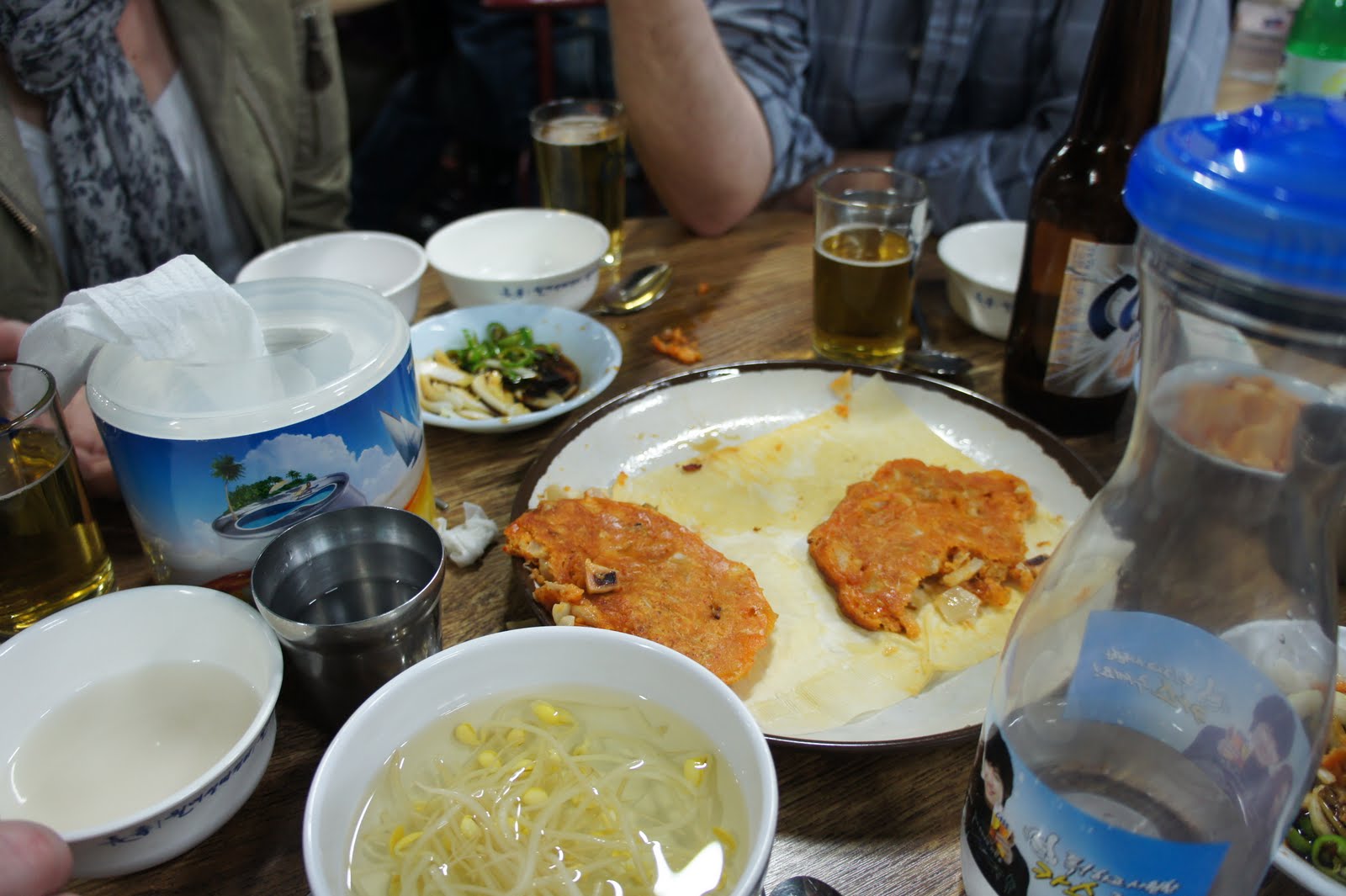
Apparently there is no right answer, but if you drink too many you will end up across the street at a Korean Kimchi Pancake House eating spicy and more greasy food like this...


It tasted better than this looks (a side affect of soju bombs, forgetting to take first initial photos). Nice and spicy with the right amount of crisp, something I would make at home.

Pajeon, p’ajon, pajon, pa jun, pageon, jeon…I’ve seen so many variations on the name that I just decided to go with calling them Korean Pancakes. They are also specific restaurants that serve them late night (after drinking) in an area called Hongdae.

PS- I do not advise or condone over eating or over drinking at all (one or two at the most), and pregnant women should never drink alcoholic drinks.

Walking everywhere helps, plus add water times ten. I am not a real beer drinker, so the Cass brand was like Coors light to me, blech!

Gamsagomnida! (Thank you!)


Or maybe the right word is Cheers!

Monday, November 7, 2011

Yulu Seeds from Mexico


Don't you just love going out into the world and discovering food you might have not otherwise tried?

I do. Its was makes my world go around. Korea has been a very different food experience for us the past month.

But even in the states when hubby travels to Arizona for work at least once or twice a year we can still bring home something new. This time it was from a local northern Phoenix store called Phoenix Urban Market, an indoor open market.

What in the world are these seeds? They come from the

Calories in Yulu Roasted Yulu Seeds
Nutrition Facts
Yulu - Roasted Yulu Seeds

Servings:

Calories 160 Sodium 230 mg
Total Fat 11 g Potassium 0 mg
Saturated 3 g Total Carbs 9 g
Polyunsaturated 0 g Dietary Fiber 8 g
Monounsaturated 0 g Sugars 0 g
Trans 0 g Protein 6 g
Cholesterol 0 mg
Vitamin A 6% Calcium 15%
Vitamin C 2% Iron 6%

*Percent Daily Values are based on a 2,000 calorie diet. Your daily values may be higher or lower depending on your calorie needs.

YULU Seed of the Bonete Tree A Natural Organic Food Product of the Indigenous Pueblos of the Sierra de la Serpiente in Guerrero, Mexico. (taken from Tiankizco website)

Some sites believe they are from the wild papaya, and until I saw a video and talked with the man who harvests them in May, I also thought the same-  Carica Papaya Photo

They are the seeds of a tree in which these large pods are removed and then seeds are removed. They are often roasted and taste like a cross between sunflower seeds and maybe a peanut. A bit chewy and get into the crevices of your teeth, but a healthy organic snack, slated or unsalted.

Tuesday, November 1, 2011

My Creepy 'Korean' Halloween Contribution


If you think you can stomach this, please continue...


While in Insidong, an area of Korea, where we walked markets, ate yummy Korean street foods my hubby decided he needed to try some Silk Worm Larva. As you can see they boil or fry them, then serve them up in a cup with a toothpick.


My husband often likes to try weird and strange food as we travel, or even locally. I just document, unless they are chocolate covered. Maybe even bacon. Everything tastes good with chocolate and bacon, right?


Thankfully he only ate a few and decided they were not tasty. They smelled horrendous. 


Soon we moved into the honey stuffed bread zone...then I could breathe much easier.

Hope you all had a great Halloween Holiday weekend. It snowed in New Jersey and the temps are rather cool for this time of year, and I'm looking forward to getting back in my own kitchen. My son's space...only one person can even turn from the two burner stove to the sink. But I managed to make us a feast last night.